Every winter we get calls from homeowners in North Jersey with water dripping from a ceiling or running down an inside wall, even though the roof looks fine from the street. Most of the time the cause is an ice dam. Good ice dam prevention starts before the first big snow, so here is what causes them, how to spot them and what actually fixes the problem.
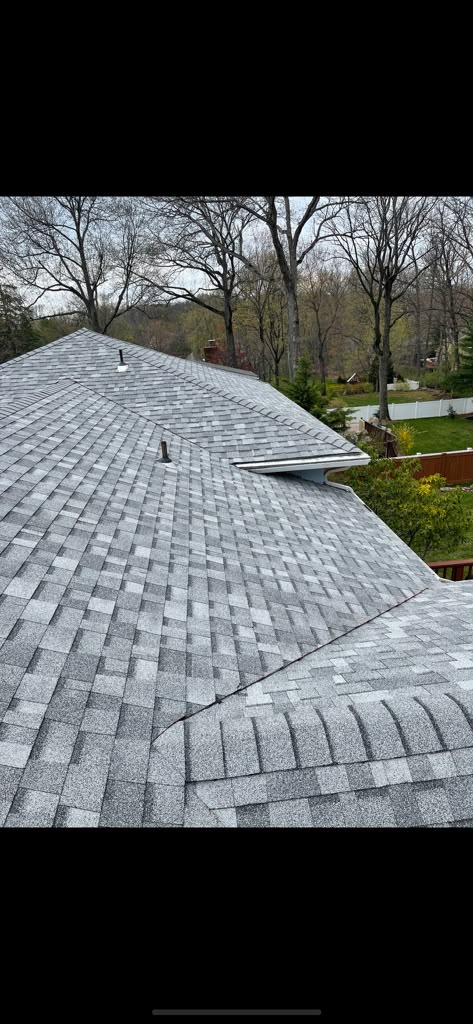
What is an ice dam?
An ice dam is a ridge of ice that forms along the bottom edge of the roof, usually right above the gutters. Snow higher up on the roof melts, the water runs down under the snow, and when it reaches the cold eave it freezes again. Day after day the ridge of ice grows. Then the next round of meltwater has nowhere to go, backs up under the shingles and finds its way into the attic, walls and ceilings.
Shingles are designed to shed water running downhill. They are not designed to hold back standing water, which is why ice dams cause leaks on roofs that are otherwise in good shape.
Why ice dams form on North Jersey homes
Our winters are the perfect recipe: snow followed by sunny days, then nights well below freezing. But the weather is only half the story. The real cause is heat escaping from the house into the attic. A warm attic warms the roof deck, the snow on top melts, and the cycle begins.
The most common reasons attics run warm are:
- Not enough insulation on the attic floor, or insulation that has settled or been disturbed
- Gaps around light fixtures, bathroom fans, attic hatches and plumbing pipes that let warm air leak up
- Blocked or missing soffit vents, so the attic can’t pull in cold outside air
- No ridge vent, or too few roof vents to let warm air out
- Heating ducts running through the attic
Older homes, Cape Cods with finished upper floors and homes with low-slope sections are especially prone, because there is little room for insulation and air flow between the living space and the roof.
Warning signs to watch for
- Large icicles hanging from the gutters or roof edge
- A thick band of ice along the eaves while the rest of the roof is clear
- Water stains or peeling paint on ceilings near outside walls
- Damp insulation or frost on the underside of the roof deck in the attic
- Gutters pulling away from the house under the weight of ice
Ice dam prevention that actually works
Real ice dam prevention means keeping the whole roof deck cold, so snow melts evenly from the sun instead of from the attic.
1. Seal air leaks into the attic
Sealing the gaps around fixtures, fans, chimneys and the attic hatch is often the single most effective step. It keeps warm, moist air in the house where it belongs.
2. Add insulation
Once leaks are sealed, adding insulation on the attic floor slows the heat that rises through the ceiling.
3. Balance the ventilation
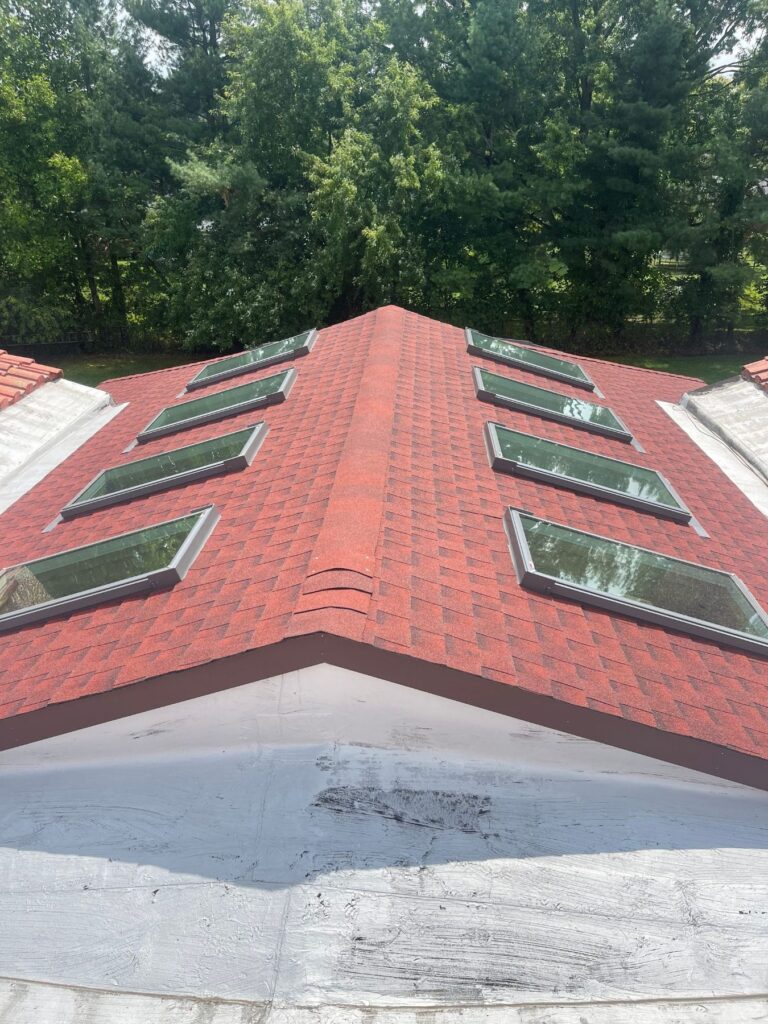
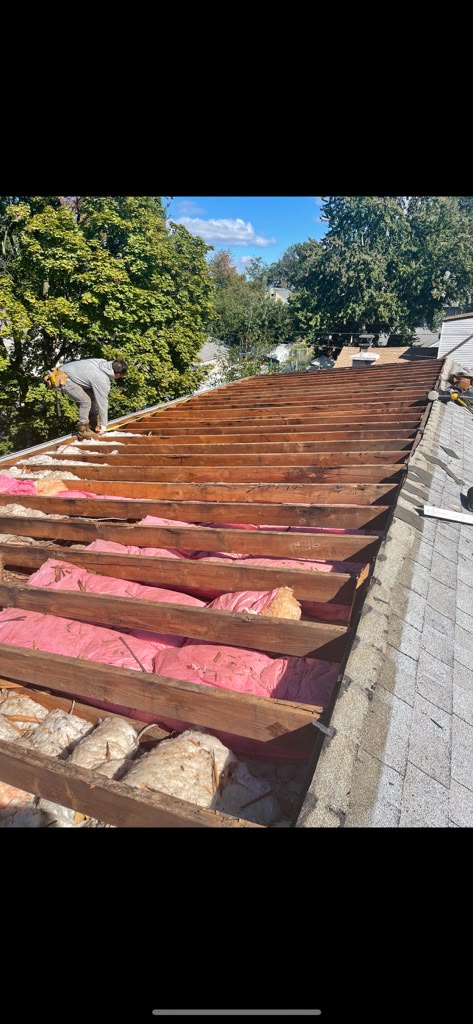
Cold air should come in at the soffits and warm air should leave at the ridge. A continuous ridge vent paired with clear soffit vents keeps the underside of the roof close to the outside temperature. We check this on every roof replacement, because a new roof on a poorly vented attic won’t fix ice dams.
4. Install an ice and water membrane at the eaves
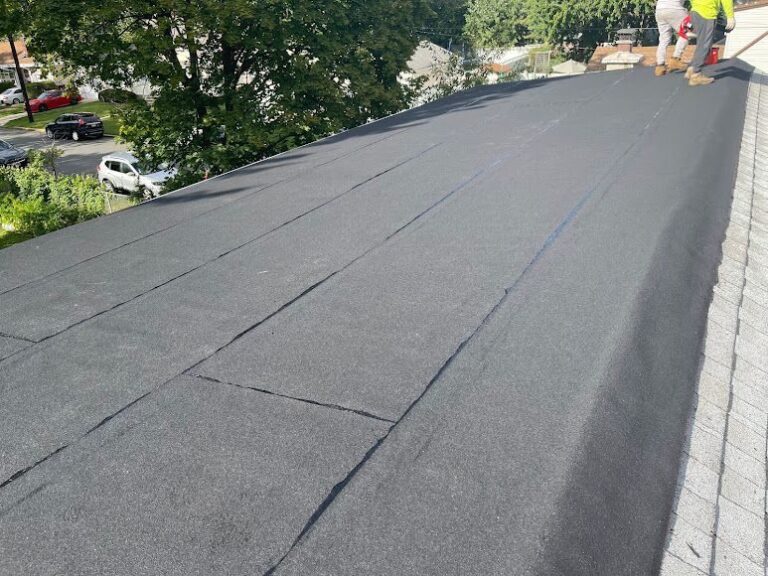
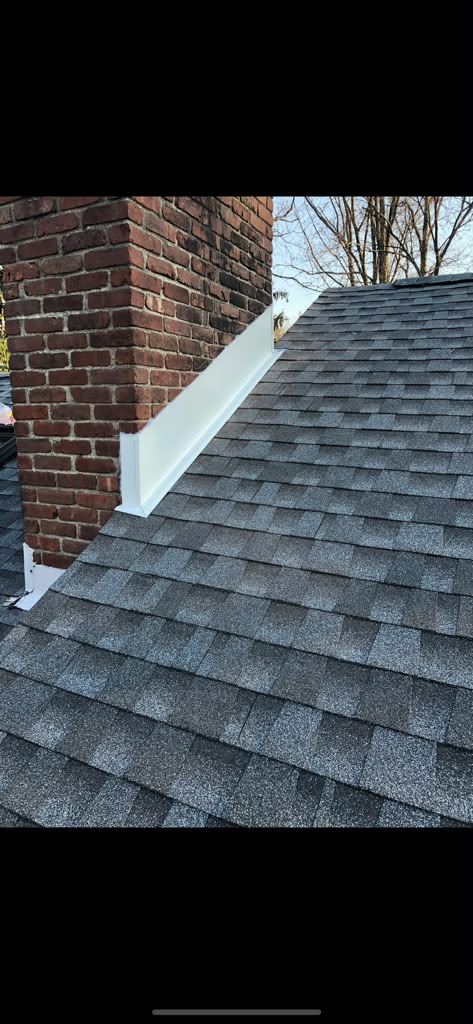
A self-sealing ice and water membrane goes under the shingles along the eaves, valleys and around chimneys. Building codes call for this ice barrier in areas like North Jersey that see ice dams, extending from the roof edge to at least 24 inches inside the exterior wall. It won’t stop ice from forming, but it is the backup that keeps water out of the house when it does.
5. Keep gutters clear
Gutters packed with leaves freeze solid and make ice dams worse. A fall cleaning, and gutters pitched properly toward the downspouts, help meltwater drain away.
What to do if you already have an ice dam
Safety first: don’t climb onto an icy roof or chip at the ice with a hammer or shovel. That damages shingles and gutters and is a real fall risk. From the ground you can carefully pull snow off the lower few feet of the roof with a roof rake, which takes away the source of meltwater. If water is already coming inside, catch it, move valuables and call a roofer. Our emergency roofing service is available 24/7.
Once the weather clears, it’s worth finding the cause. A roof inspection, plus a look at the attic, tells you whether you need air sealing and insulation, better ventilation, roof repairs or, on an older roof, a roof replacement with a proper ice barrier.
Quick ice dam prevention checklist
- Seal air leaks into the attic around lights, fans, pipes and the hatch
- Bring attic insulation up to a healthy depth
- Clear the soffit vents and make sure there is a ridge vent or enough roof vents
- Install an ice and water membrane at the eaves and valleys with your next roof
- Clean the gutters in late fall
- Use a roof rake from the ground after heavy snow
Heated cables are sometimes sold as a fix. They can keep a channel open for meltwater, but they treat the symptom, use electricity all winter and do nothing about heat loss. For lasting ice dam prevention, start with the attic and the roof itself, and save cables for trouble spots that can’t be fixed another way.
Not sure where to start? An inspection of the roof and attic gives you a clear ice dam prevention plan, beginning with the fixes that make the biggest difference for your house.
Get ready before the snow
Ice dam prevention is much cheaper than repairing wet ceilings, insulation and drywall. A-1 Garden State Construction is based in Little Falls, NJ and serves homeowners across North Jersey with roof inspections, repairs, replacements and roof maintenance. NJ Home Improvement Contractor #13VH08989700.
Request a free estimate or call us to have your roof and attic checked before winter.